



Every July, Europe funnels itself onto the same crowded coastline. Fresh from a week in St. Moritz, here’s the contrarian case I’ll be making from now on: in high summer, the mountains quietly beat the beach.
1. The Luxury Math Flips
July is the Mediterranean’s peak season and the Alps’ quiet one. The same money that buys a compromised coastal room in August buys a legendary Alpine address with the lobby half-empty. Peak-season pricing works both ways; be on the right side of it.
2. The Light Runs Long and Soft
Alpine summer evenings stretch past nine, with golden hour bouncing between peaks instead of dropping into a flat sea horizon. For photography, mountain light in July is a different sport from beach light.
3. You Can Actually Move
Hiking from the hotel door, lakes without a single reserved sunbed, mountain passes open and empty on weekday mornings. The coast in July is a queue; the Alps are a playground with no line.
4. The Trains Are the Attraction
The Bernina line out of St. Moritz climbs past glaciers and drops toward Italy through scenery that makes passengers put their phones up, not down. No coastal transfer on Earth is part of the holiday the way Swiss trains are.
5. Twenty Degrees Is a Feature
While the coast bakes at 35°C, the Engadin sits at a civilized 20-24 with cool nights. You sleep with the window open. You hike at noon. Nobody schedules their day around escaping the temperature.
6. The Water Is Still There
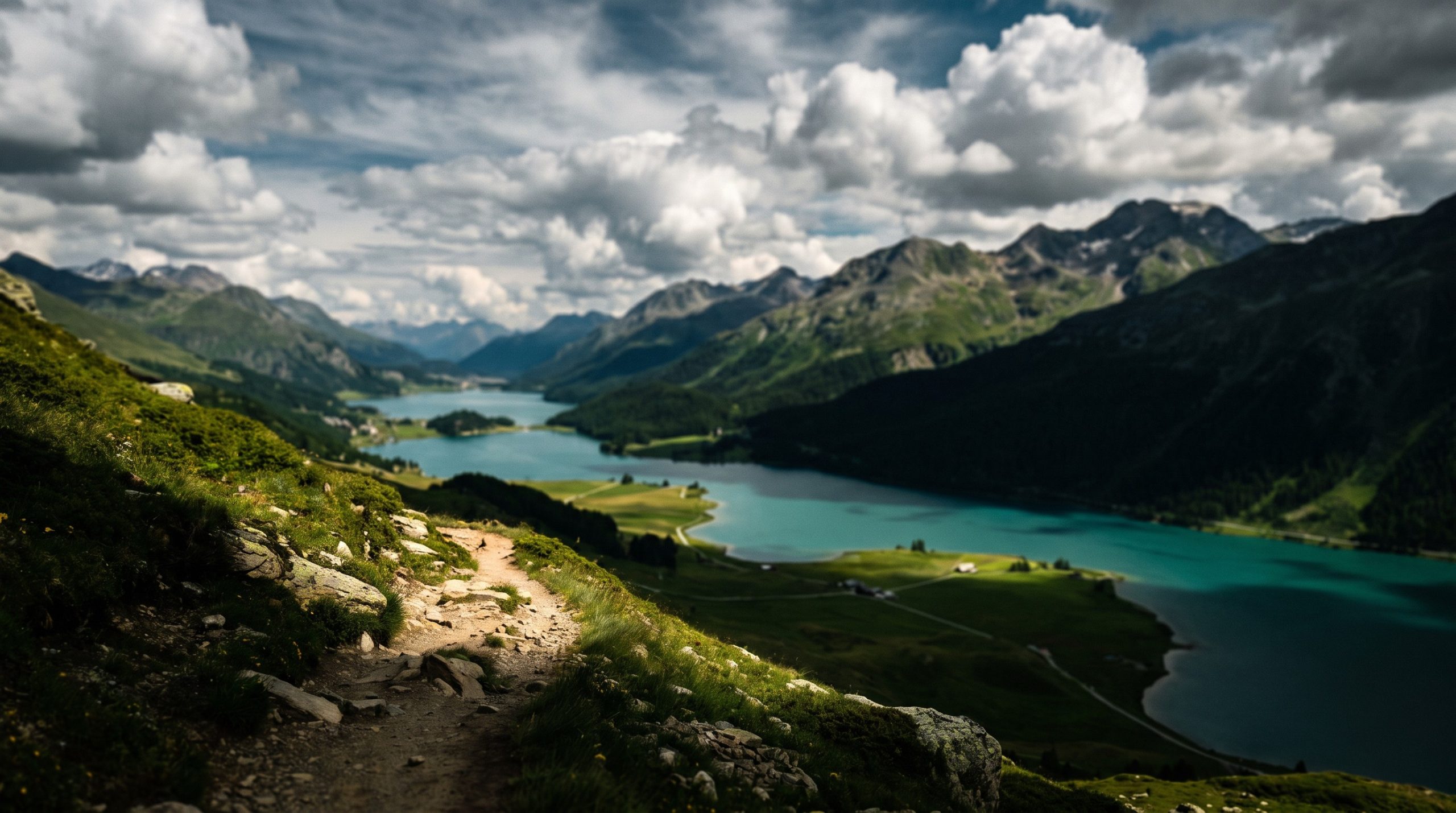
The quiet secret: Alpine summer is a lake holiday. Sailing on Lake St. Moritz, swimming in mountain lakes that hit surprisingly humane temperatures by late July, paddleboards at dawn with glaciers in the background. You give up salt; you keep everything else.
I’ll still take the Mediterranean in June and September. But July belongs to altitude now. See you at 1,800 meters.