



St. Moritz is a winter legend, the place where Alpine winter tourism was effectively invented, on a bet made by a hotelier in 1864. That hotelier ran the Kulm. This July, I checked into the same hotel to test a theory: that the Alps’ most storied winter address might be even better in summer.
The Setting
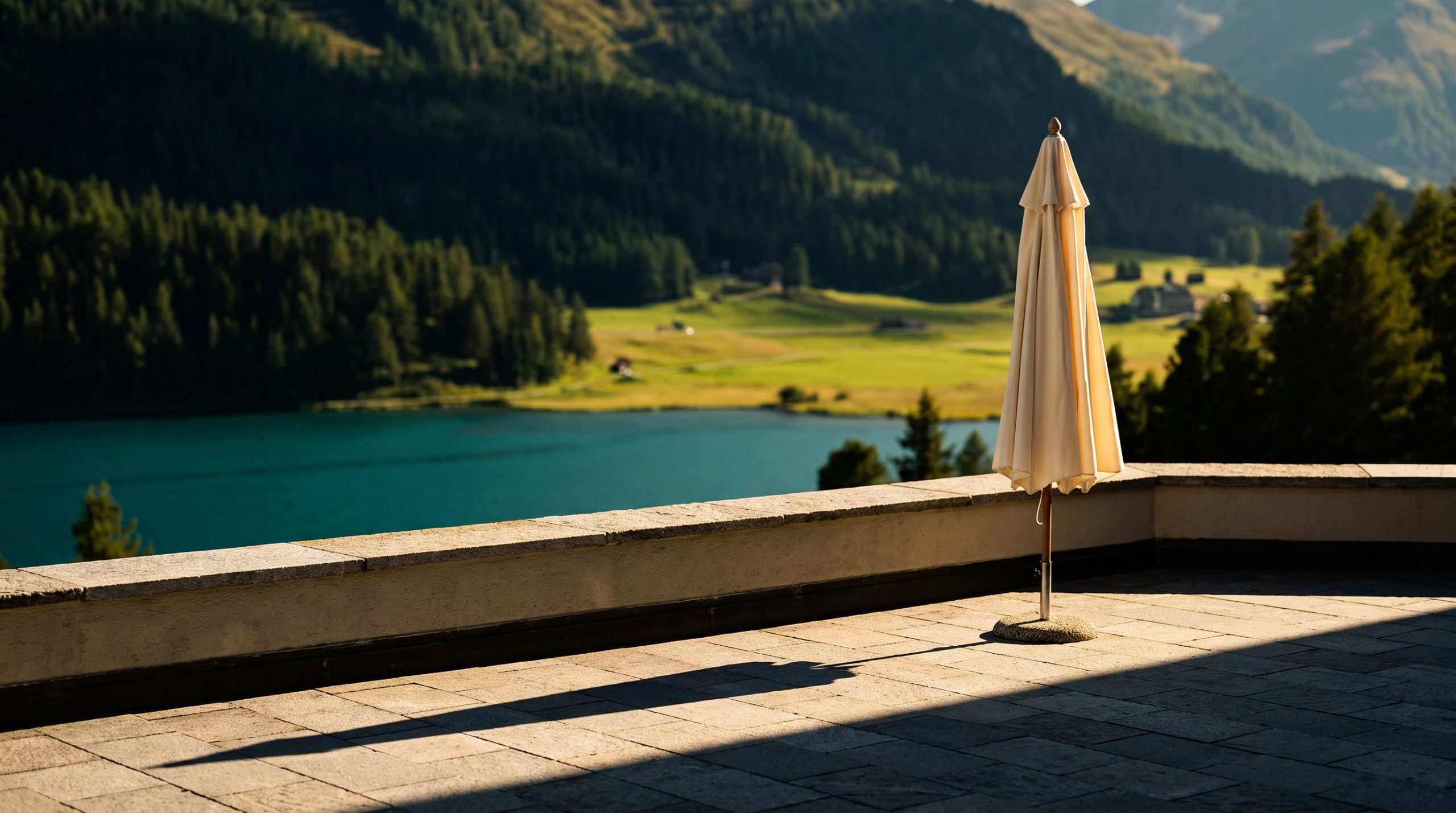
The Kulm sits above Lake St. Moritz with the Engadin valley unrolling below, in July, a palette of green meadows, dark pine and water that shifts between steel and turquoise with the clouds. Winter guests get white. Summer guests get color, and I’ll take the color.
The Stay
The hotel opened in 1856 and wears its history the right way: grand public rooms, corridors that feel like a museum of Alpine tourism, and service with that precise Swiss warmth that anticipates rather than hovers. My room looked over the lake, the kind of view that reorganizes your morning routine around the balcony. The spa is serious (the pool alone justifies a bad-weather day), and breakfast belongs in the conversation for best in the Alps.
Summer Is the Secret Season
Here’s the part that matters: in July, St. Moritz runs at a fraction of its winter occupancy and intensity. Trails start from the door, the Muottas Muragl funicular nearby delivers the single best panorama of the Engadin lakes. The lake hosts sailing and morning mist. And the Bernina rail line, one of the most scenic train routes in the world, departs from town. I filmed for four days and never repeated a landscape.
Verdict
Winter St. Moritz sells glamour. Summer St. Moritz sells the actual Alps, emptier, greener, cheaper, and for a filmmaker, flatly better. The Kulm in July is a grande dame with the ballroom to herself. Book the lake view. Take the trains. Tell no one, or everyone; the mountains can handle it.